The biggest risk from AI is not AI itself. It is refusing to learn.
There is a lot of anxiety around AI today.
People are worried about jobs. Companies are wondering how many roles will change. Professionals are asking whether the skills they have spent years building will still matter.
I understand the concern. But when I look at how technology has changed the world over the years, I don’t see anything completely new here.
When computers entered the workplace, there was fear that they would take away jobs.
When the internet became mainstream, many industries wondered what would happen to the way they worked.
When automation entered factories, people worried that machines would replace workers.
Technology did change jobs. Some roles disappeared. Many roles changed. But at the same time, completely new opportunities emerged.
I believe AI will follow a similar path.
The work will change
There is no point pretending otherwise.
A lot of repetitive work will eventually be automated. Some tasks that take hours today may take minutes tomorrow. Some roles will need fewer people doing routine activities.
But that doesn’t mean humans become irrelevant.
It means the value of what we do has to change.
The person who only knows how to perform a repetitive task is going to have a much harder time.
The person who understands the business problem, can think critically, make decisions and knows how to use AI effectively will become much more valuable.
That is where I think the real shift is happening.
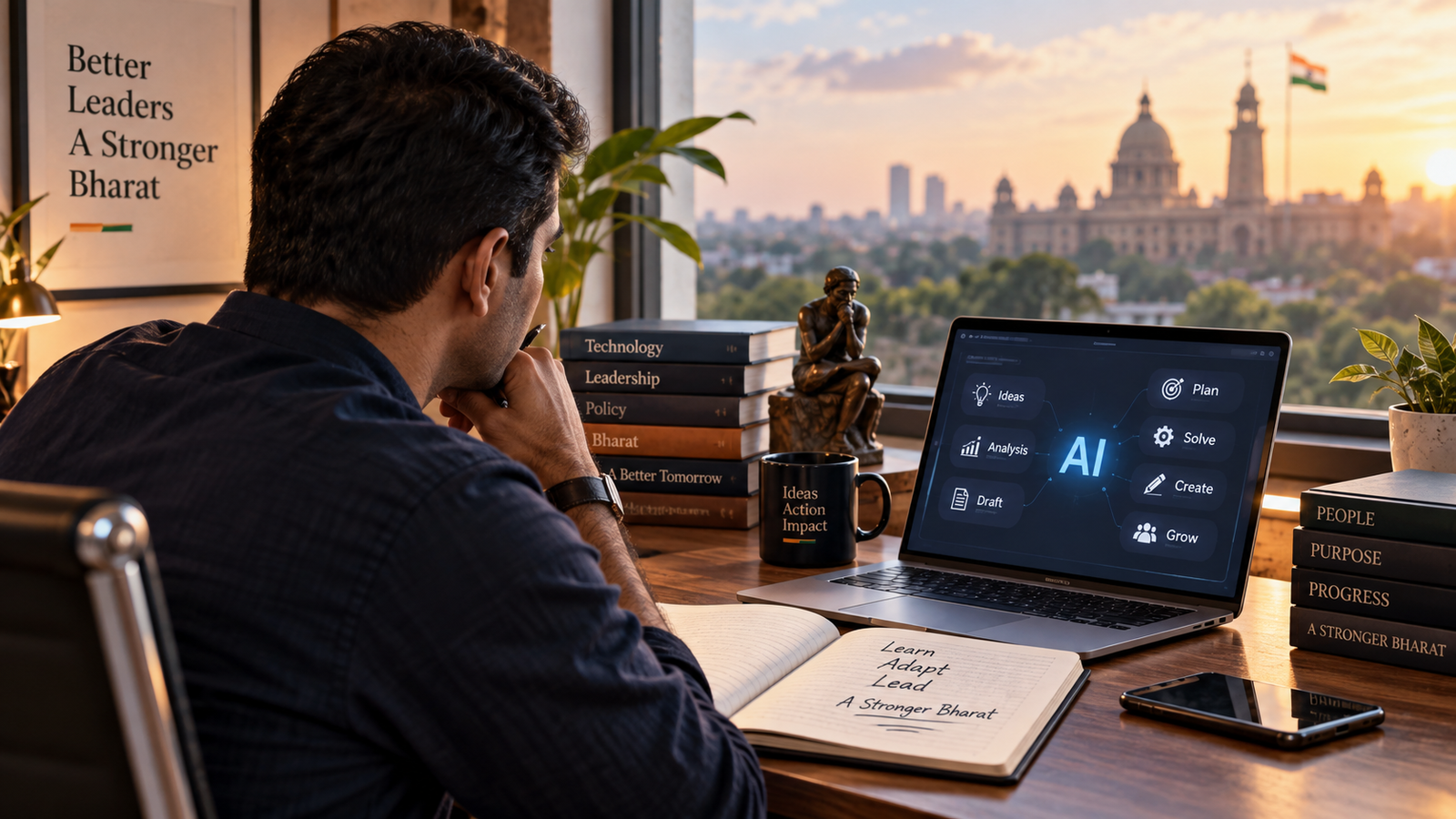
Learn AI. Work with AI. Don’t compete with it.
I don’t think every professional needs to become an AI engineer.
But every professional should understand how AI can improve the way they work.
Learn how to use it.
Use it to automate repetitive tasks.
Use it to analyse information faster.
Use it to improve productivity.
Use it to experiment with ideas.
And most importantly, learn how to combine AI capabilities with your own experience and judgement.
AI can give you information. It can generate possibilities. It can help you execute faster.
But knowing what to ask, what to accept, what to reject and what decision to make still requires human judgement.
The real advantage will be adaptability
This is the part I think we don’t talk about enough.
The biggest threat is not artificial intelligence.
The bigger threat is refusing to learn while the world around us changes.
Someone with ten years of experience who refuses to adapt can eventually find themselves competing with someone who has less experience but knows how to use new tools effectively.
That is already changing the workplace.
The question is therefore not:
Will AI replace humans?
The more important question is:
Will we learn fast enough to work alongside AI?
From learning AI to leading with AI
For me, this is where the conversation becomes more interesting.
We shouldn’t stop at learning AI tools.
We need to learn how to lead in an AI-driven environment.
That means understanding how AI affects people, processes, decisions and organisations.
It means knowing where automation makes sense and where human judgement is still essential.
It means helping teams adapt instead of simply telling them to “use AI.”
And it means continuously learning because AI itself will continue to change.
I don’t believe the future is Humans versus AI.
I believe the future is humans empowered by AI.
The people who start adapting today will have a better chance of leading tomorrow.
The future may not belong to the people who know the most about AI. It may belong to the people who are most willing to learn, adapt and use it responsibly.
— Pratap Veneeth