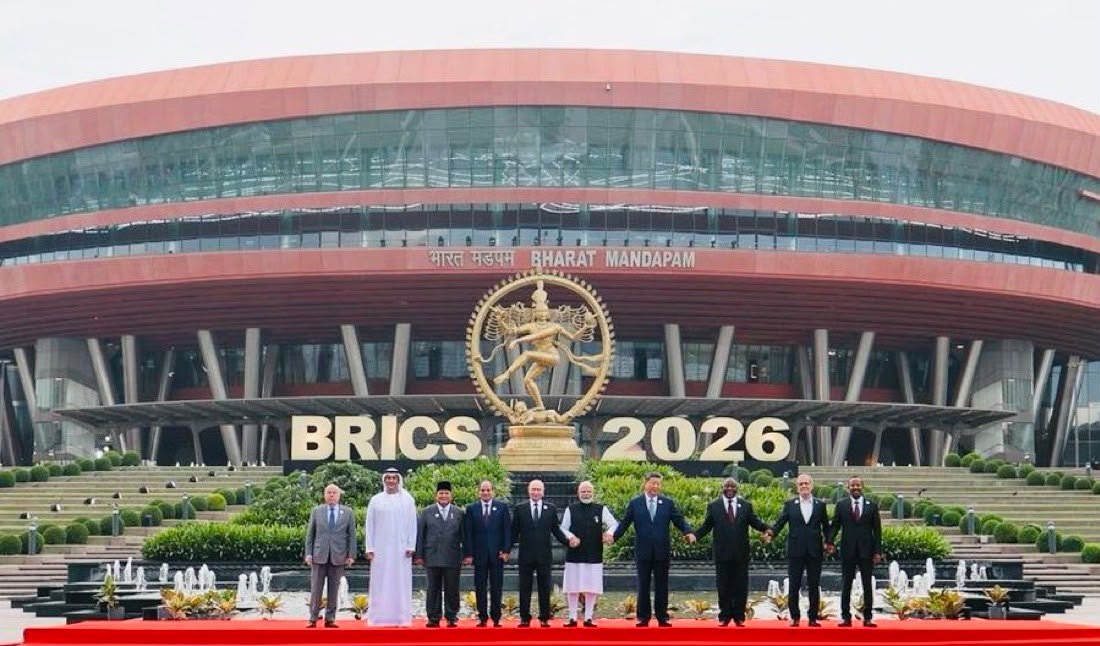
BRICS 2026, New Delhi.
We have heard the speeches, seen the photographs and read about the agreements and declarations. But after all of that, there is one simple question I keep coming back to:
What does BRICS actually mean for me?
What does it mean for an ordinary Indian? Does it make any difference to our economy, our jobs, our technology, our security or the opportunities available to our businesses and young people?
I am not looking at BRICS as a geopolitical expert. I am looking at it from a much simpler perspective—what can India actually gain from this, and when will the common man see the impact?
The New Delhi Declaration covered a wide range of issues, but I see four key takeaways that matter most for India.
1. India is strengthening its voice in the Global South
India has consistently argued that today’s global institutions need to better reflect today’s economic and geopolitical realities.
The BRICS declaration again supported greater representation of developing countries in global institutions, including reform of the United Nations Security Council. China and Russia also reiterated support for India having a greater role in the UN.
This does not mean that BRICS can deliver India a permanent seat on the Security Council. But it does strengthen India’s case by bringing the support of an important group of emerging economies behind it.
For me, the larger point is this: India increasingly wants to be a rule-shaper, not merely a rule-taker.
2. The economic opportunity may be more important than the geopolitics
BRICS is often discussed mainly in geopolitical terms. I think we should look equally at its economic potential.
The New Delhi Declaration supports efforts to make cross-border payments faster, cheaper and more secure, including greater use of local currencies in trade and investment.
If these efforts become practical for businesses, they could reduce friction in trade and create more options for companies operating across BRICS economies.
But this is where implementation matters.
A declaration does not automatically make trade easier. The real measure of success will be whether businesses actually see the benefit.
3. Technology and AI could become India’s biggest opportunity within BRICS
This is the area I find most interesting.
The declaration recognizes artificial intelligence as an important driver of economic development and calls for cooperation around safe, secure, inclusive and trustworthy AI. It also identifies applications across areas such as agriculture, healthcare, education, finance and manufacturing.
India has already demonstrated what is possible through digital public infrastructure, digital payments and technology-enabled public services.
The opportunity now is to take some of these capabilities to other emerging economies.
If India can help build practical technology solutions for agriculture, healthcare, education and governance, our contribution to BRICS can go well beyond diplomacy.
This is where India’s technology strength can become a real instrument of global influence.
4. India used its BRICS chairship to put terrorism on the agenda
The New Delhi Declaration strongly condemned terrorism and specifically referred to the Pahalgam terrorist attack.
For India, this is important because terrorism is not only a security issue. It also affects economic confidence, tourism, investment and regional stability.
India has consistently argued that terrorism cannot be viewed selectively.
Having that position reflected in a wider BRICS declaration gives India another platform to push for stronger international cooperation against terrorism and terror financing.
What matters now
For me, the most important takeaway from the New Delhi Summit is that India has created an opportunity; the next step is to convert that opportunity into outcomes.
Better trade links.
Stronger technology partnerships.
Greater economic cooperation.
A stronger voice for developing countries.
India’s BRICS chairship has given us a platform. The value of that platform will ultimately depend on what we build with it.
A summit creates visibility.
A declaration creates direction.
Implementation creates impact.
— Pratap Veneeth